Showing posts with label Debates. Show all posts

Wednesday, 22 October 2014

Minimum Wage Raise: Hurt or Help?

By Caroline Kimbro

An overview of the minimum wage rates across the US.
(Click to enlarge image.)

As the possibility of raising the minimum wage from $7.25 to $10.10 an hour is discussed by US government officials, we hear much about the extra money it will provide for households all over America and the ways it will strengthen the economy. However, we know that most changes come with an opportunity cost and this change in wages is no exception. If businesses are required to pay their workers $2.85 more than they currently do, most will reconsider who they’re hiring. Since they have to spend extra money on employees, many businesses will want workers they think are worth this higher wage: in effect, a raise in the minimum wage will cause a shortage of jobs, particularly for the average American teenager, unskilled worker, and minority worker.

Monday, 8 September 2014

Will Scotland make history?

By Magdalena Paczocha


On 18 September, voters in Scotland will be asked in a referendum whether they want the nation to become independent from the rest of the United Kingdom. The reason behind the willingness to take Scotland's destiny into Scottish hands was the landslide victory of The Scottish National Party in the 2011 Scottish Parliament election. Independence is a main goal of this party. An agreement was signed on 15 October 2012 by the Prime Minister of the United Kingdom, David Cameron, and the First Minister of Scotland, Alex Salmond, which provides a legal framework for the referendum to be held. The referendum question will say: "Should Scotland be an independent country?"  The principal issues in the referendum are the economic strength of Scotland, defence arrangements, continued relations with the UK, and membership of supranational organisations, particularly the European Union and NATO.


Wednesday, 25 September 2013

'Gun Control' - Does it work?

by Eyrie Clark

11 dead. 10 dead. 26 dead. Every year, over 250 mass-shootings take place in the United States, making an average of almost once per day.

In the wake of so many mass-shootings: Fort Hood, the Aurora theater, Sandy Hook Elementary School, and most recently the shooting at the navy yard in Washington, D.C., and finally, the shooting of 13 people in a Chicago basketball court, which included a three-year-old child among the victims, many people not only in the United States, but around the world, are having a serious debate about the merits - or lack thereof - of gun control.
Credit to The Guardian

Many people believe there is no connection between gun control and the rate of violence in a country. For instance, Republican Representative John McCain believes that there is no connection between guns and violence at all. He, along with many other conservatives, persistently speaks out against gun-control laws, attempting to block almost all progress. So let's start out by having some fun and tearing his statement to pieces.

Wednesday, 31 July 2013

Is Latin really making a comeback?

by Viva Avasthi


Ancient Rome

Despite The Economist's conviction that Latin is making a comeback, as described in their article from a couple of days ago, I beg to differ. In fact, I believe that the question is not, "Why is Latin making a comeback?" but rather, "Is Latin really making a comeback?"

I'm afraid the answer is, "Not really, no."

Although it would be brilliant if Latin really were making a comeback, The Economist's argument that Latin is becoming more popular can be refuted in two parts: by observing the ancient language's popularity in young people and by analysing just how popular the Latin-based services the newspaper refers to are. I'll also try to attempt to use ideas from behavioural economics to explain why Latin is not making a comeback any time soon.

Monday, 15 July 2013

Britain's EU Membership - The Cons

by Karina Shooter

Picture courtesy of studentthinktank.eu
In my previous article, we looked at the advantages of Britain’s EU membership.  Now we are going to consider the alternative point of view – what are the disadvantages?

One of the most common arguments which is used to oppose Britain’s EU membership is the cost. Different estimates on how much EU membership costs Britain per year vary dramatically, for example although the Foreign Office and Commonwealth say that the cost of EU membership is £300 per head, the Bruges (an anti EU group) claim that the cost per head is £873. The argument put forward from Euro sceptics is that we are suffering from an imbalance of payments – the UKs allocation from the EU budget is much less than our contribution in the form of membership payments – therefore we are experiencing a trade deficit.


Thursday, 4 July 2013

Britain’s Membership of the EU – The Pros

by Karina Shooter

Photo courtesy of www.bbc.co.uk

Sky News has announced the results of an exclusive survey about Britain’s EU membership. In response to the question: "Do you think that the United Kingdom should remain a member of the European Union?” 51% voted ‘No’, with 49% supporting the ‘Yes’ option.

The results show that there is no clear consensus on people’s views towards EU membership, and if we take into account the fact that the poll will have a margin of error, it really does highlight how result of the referendum vote could go either way. This means that it is more important than ever to discuss the pros and cons of EU membership. I will look at each side of the argument in separate articles. In this article we will look at the advantages of Britain being a member of the EU, in a subsequent article I will explore the disadvantages. 

Perhaps the most obvious advantage of EU membership is the single market. Europe is the world’s largest single market – it is an economic zone larger than that of the USA and Japan combined and it has a total GDP of around £11 trillion. The single market allows Britain to freely trade good and services between countries in the European Union, without tax or regulations. European markets account for half of the UK’s overall trade and foreign investments. It is said that EU countries currently trade twice as much with each other as they would do in the absence of the Single Market. 


Friday, 7 December 2012

Stem Cell Research: Life-Saving or Cold-Blooded Murder?

by Sparshita Dey

^Embryonic stem cells
Stem cell research may be the next scientific breakthrough. Scientists think that if we can discover how specialised cells turn off/on certain genes to give them particular functions and characteristics, we can start "growing" specific cells using stem cells from a person's body. These can be used to cure genetic diseases (which cannot be cured at the moment and can result in a lifetime of pain and discomfort, including early deaths) as well as other diseases that are not yet curable e.g. diabetes and paralysis. So surely using stem cells should get the go-ahead straight away? Then why do so many people oppose it? 

What is Stem Cell Research and what are Stem Cells?

Stem cell research is to do with the research of undifferentiated cells (i.e. cells with the ability to differentiate/specialise into any type of cell with any type of function in the body depending on where it is needed/ used). In plants, specialised cells can become unspecialised again (like stem cells) and then re-differentiate if needed. However, in animals, like humans, the stem cells differentiate very early on in the development of the organism (from just after a zygote is formed – i.e. in the embryonic stage) and this change is permanent.

Tuesday, 4 December 2012

Academies: The Dangerous Schools

by James Wand

michael gove, secretary of state for education, education secretary, academies
Michael Gove, the UK's Secretary of State for Education
Image courtesy of The Times
After disappointing results for thousands of students in their GCSE exams this summer, those entering secondary schools for the first time this week will be going in with more trepidation than ever before. It’s hard not to feel that the class of 2012 have been hard done by as they bear the brunt of Michael Gove’s radical reforms. Radical reforms that have resulted in schools changing from local education authority lead establishments to academies and free schools, moving away from the safety net that is local government and towards the dangerous and volatile world that is the educational free-market.


Sunday, 18 November 2012

Can footballers’ wages be justified?

by Daniel Hearn


With top footballers’ wages rising massively over the last decade or so, football is the subject of debate as to whether footballers are worth the extravagant salaries they are paid. Many argue that it is not fair that footballers get paid such huge salaries for 'chasing a ball around a pitch for 90 minutes' while nurses, who are of great social value, average a measly (in comparison) £18000-£35000 a year. Initially, it appears that there is cause for debate because footballers like Samuel Eto’o who appear to offer little, if any, social benefit, make more than £35000 in a week! A breakdown of Eto’o’s wages is shown in the image to the right:

His wages do indeed appear excessive, but surely there must be a reason for this. In actual fact, there are a number of reasons that soon shed light on why footballers’ wages so extortionate. 


Saturday, 1 September 2012

Communism vs. Capitalism

by Charlotte Wright

Communism and capitalism provide two very different ways of life. Is one better than the other?


communism vs capitalism, communism, capitalism, economics for teens, economics for teenagers
An interesting opinion!

Tuesday, 31 July 2012

History of Economics: Why It's Still a Teenager

by Viva Avasthi


Image source: http://www.heathwoodpress.com

As it is a relatively new subject, economics could be considered a teenager compared to other subjects! If we look back through Western history, it is clear that most subjects developed substantially in the classical civilisations of Ancient Greece and Rome. From mathematics to music, literature and forms of science, the Ancients form the basis of most of the subjects we study today. For some reason, this is not the case for economics. Although the word 'economics' comes from the Ancient Greek Î¿á¼°ÎºÎ¿Î½Î¿Î¼Î¯Î±, the Greeks only really studied home economics and wrote books only in subjects like bargaining for horses. Why is this the case? Why is it that for the first influential book on economics to be published in the western world, we had to wait until 1776 for Adam Smith and his The Wealth of Nations? Here, three main contributing factors are explored:

Sunday, 29 July 2012

Gender Equality: Fact or Fantasy?

we can do it, gender equality, feminismby Shireen Avasthi


In the Western world, many people are under the illusion that gender inequality is alive and thriving in the East, and in the West everyone is equal. Despite this being a common opinion, it is far from the truth. Admittedly, the East has a lot of problems where gender inequality is concerned, but the West definitely doesn't have a clean slate either.

So let's start with the East. Here are 10 of the most shocking examples of gender inequality that exist there:


Wednesday, 25 July 2012

Ageing: Why Are People Scared of It?

by Shireen Avasthi
old woman, fear of ageing
Why do so many of us have a fear of ageing?

Having a phobia of ageing is nothing to be embarrassed of - lots of people are in the same situation. The question is: why do so many of us have a fear of ageing? 

What do you value most about youth? Is it beauty, intelligence, freedom, just having a good time and a laugh, or is it something else? Whatever it may be, chances are that there are multiple stereotypes pinned to it. More likely than not, one of these stereotypes is that you will be robbed of this quality as you grow older.

Thursday, 19 July 2012

Older Women in the Media

women, tv, female presenters, bbc
Luck of the draw or are older women not welcome on TV?
by Clemency Flitter

Female equality is something that many people would like to feel has finally been put to bed and women are now being seen on a par with men in most areas. However, it seems to me that the media has so far been a little slow to take up this ideal. Recently the BBC has been under fire over an ageism scandal after a former Countryfile presenter, Miriam O’Reilly, won an age discrimination case against the BBC after being dropped from presenting the TV show. While I agree that this may have been a clear case of age discrimination I can’t help but wonder if the same would have happened if Miriam was a man.


Tuesday, 17 July 2012

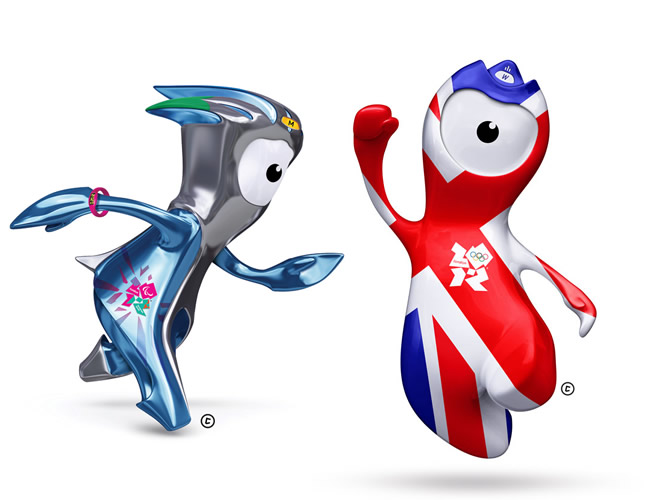
10 Impacts of the Olympics on the UK

by Viva Avasthi
olympics mascot. olympics, mascot, wenlock, mandeville, economics for teens, economics for teenagers

With only ten days remaining until the opening ceremony for the London Olympics commences, here are ten ways that the Olympics have affected (or will affect) the UK.


Sunday, 15 July 2012

A Modern Monarchy?

by Clemency Flitter

It seems that the monarchy in Britain is more popular than ever! After the relatively recent royal wedding and the more recent Diamond Jubilee people are in love with the British monarchy more so than ever; after all our monarchy is something that is quite rare in these times. Since the French Revolution having a monarchy became something that was increasingly rare as many European countries such as Russia (who got rid of the Tsar) and Germany (who dispatched with the Kaiser near the end of World War I) have left their monarchy behind and moved on. However, maybe Britain’s decision to stick with our traditionalist monarchy has paid off rather well in the long run.

queen, queen in china, diamond jubilee
The "Queen" arrives to great crowds in Shanghai
As one of very few surviving monarchies the Queen and Buckingham palace attract many tourists to London each year. There is also a lot of foreign media attention in large events in which the monarchy feature. America, in particular, had a lot of media attention spent on the Royal Wedding and even made a film about it! On the Queen’s Diamond Jubilee President Barack Obama sent out a video message to the Queen and there were many American tourists in London to get a glimpse of the Jubilee procession. The Queen is also very popular in China, recently a lookalike was present in Shanghai to try to give Chinese people the feel of the Diamond Jubilee, this caused a big stir as thousands of people flocked to see the fake monarch as news spread of the arrival of “Queen Elizabeth”.

Tuesday, 10 July 2012

The Social Contract: Part 1

by Viva Avasthi

“Society is a contract… the state is a partnership not only between those who are living, but between those who are living, those who are dead, and those who are yet to be born.” (Edmund Burke - 18th Century political theorist and philosopher)


people, society, culture, economics for teens, economics for teenagers
Edmund Burke was essentially suggesting that the well-being of the nation and all its citizens is of greater importance than the individual. In a sense, this is very similar to the quote "no man is his own island" in the way that the idea of everybody being deeply interrelated is a prominent feature of both quotes. But how many of today's governments are actually adhering to the 'contract' that everybody seems to have unwittingly signed? This intriguing idea was elaborated upon by the economic historian Prof. Niall Ferguson in the first of this year's  BBC Reith Lectures. In this first of a series of four lectures, Niall Ferguson argued the case that "today we've had a breach of [the contract]." 

On Friday, I will be explaining how Niall Ferguson defended his point of view and I will be giving a few counter-arguments both for the sake of debate and to provide you as readers with a relatively balanced perspective. However, before we engage in some serious debating on Friday (yay!), here's a chance for you to share your initial views on the subject.

 Do you believe modern governments are in breach of this 'contract'? Do you feel that governments need to be more open in terms of revealing their decision-making and so on to the public? Comment, comment, comment!

Click here to read the follow-on article.

Thursday, 17 May 2012

Animal Testing: A Scientific Debate

protesters, animal rights, economics for teens, economics for teenagers
by Clemency Flitter


Saturday the 28th of April was the World Day for Animals in Laboratories. To mark the occasion there was a large protest and march in Birmingham and it was there where I found out more. When people think about these protests I can imagine many only think of the hard-core environmentalists and radicals. However, this didn’t appear to be the case from where I was standing. There were people of all types, all racial and social backgrounds. The speakers and leaders of the protest also made sure that it remained peaceful and even made a point of thanking the police presence; it was a far cry from some of the protests inner cities experience, where vandalism and violence are the order of the day.


Thursday, 10 May 2012

Obama on Same-Sex Marriage

barack obama, gay marriage, same-sex marriage, gay rights, obama, economics for teens, economics for teenagers, teenage economist, teen economistby Clemency Flitter

It has been a highly contentious issue in American politics for some years now, with many politicians using clever words and neat quotes to scurry around the topic but now President Obama has spoken outright that same-sex marriage should be legalised in America. Obama has himself seemingly been avoiding making a clear statement for some time; instead describing himself as “evolving” on the issue. This turn of events is sure to bring hope to supporters of same-sex marriage across America and in the wider world. However, this comes just a day after the state of North Caroline voted to ban same-sex marriages and similar amendments have taken place in roughly 30 other states, so is the issue any closer to being solved?

Tuesday, 8 May 2012

Euthanasia: Friend or Foe?

by Shireen Avasthi

euthanasia, heart monitor
Not many people are aware of the term ‘euthanasia’. It's derived from the Greek word euthanatos, which means easy death. Euthanasia is when a very sick person’s (they are often on life support) life is discontinued (at their request) in order to cease their malady. Someone who chooses to undergo euthanasia usually has an irremediable condition.
In most cases, euthanasia is carried out at the request of the person in question. However, from time to time there are cases when the person is much too afflicted to make the decision themselves, so in that case it is usually made by close relatives, sometimes made by doctors and, in very rare cases, made by the courts.


Should euthanasia be legalised? What are the pros and cons?