Tuesday, 23 October 2012

Clever Scheme or Immoral Scam?

by Karina Shooter
 Ironic? Jimmy Carr has already been in the media spotlight for his UK tax avoidance schemes, now Starbucks is following in his footsteps… Photo courtesy of London 24

Amazon, Facebook, Google, Starbucks, Ikea and eBay – just some of the major corporations who have been in the news recently because of their UK tax avoidance schemes. Although their clever tricks and cover-ups are absolutely legal, we are left wondering whether their actions are morally questionable. 

The Facts and Figures
  • Over the past three years Amazon has generated more than £7.6bn of sales in the UK but has paid no corporation tax on the profits of these sales.
  • Facebook paid only £238,000 in tax last year in the UK despite making an estimated £175m in sales. 
  • It has been revealed that, despite earnings of £3bn in sales since 1998, Starbucks has only paid £8.6m in UK tax in the last 12 years. Last year it generated £398m in UK sales but paid no corporation tax.
  • EBay’s UK division has paid just over £1 million of corporation tax, despite generating sales of almost £800 million in the UK.

Monday, 22 October 2012

New 'Future Articles' Feature

letter, the teen economists, teen economist, teenage economist, economics for teens

Thought for the Week (22/10/12)

by Shireen Avasthi
I'm a great believer in luck, and I find the harder I work, the more I have of it.
 What Jefferson means by this is that 'luck' comes to those who work for it.

People who sit around not working for anything, just hoping they'll get 'lucky' and things will go well for them aren't 'lucky'; they're lazy. People who are truly lucky are those who create their own luck.

'Lucky' people work hard. This is why they are better off than many other people. To the rest of the world it may seem that people like this are insanely 'lucky', but in fact, they have just worked hard enough to create an amazing life that is full of great opportunities.

If 'luck' does in fact exist, it is most definitely attracted to those who work for it and earn it. Have you noticed that the 'luckiest' people you know are those that work for what they want? Maybe you are extremely 'lucky'. If so, this is only because you work hard, and the moment you stop working, your so-called 'luck' will vanish into thin air. The least 'lucky' people in your social circle are the ones who never put effort into the things they do. If you take some time to think this through, I'm sure you'll find that this is all true.

So work a bit harder this week. Put more effort into everything you do. You'll soon find that 'luck' is flying your way ;)

Sunday, 7 October 2012

Some Thoughts On...'Soaps'

by Karen Birnie


soaps, soap opera, television, economics for teens, economics for teenagers, teenage economist, teen economist
What is it about soap operas
 that makes them so addictive to the masses?
For the sake of this argument, let's say that you are taking the bus home. In front of you are two women, who are talking quite loudly, and you happen to hear snippets of their conversation. 'Did you see 'Enders last night?' 'Oh yes,' comes the reply, 'did you see what Stacey did? I can't believe she'd dare to...' and so the conversation falls prey to the winding plot of none other than the soap opera. I know that I find myself in similar situations frequently, and for this reason it seems the 'soap' is an integral part of society.

The soap opera - a staple, it seems, in the TV timetables, where millions sit down and spend the next thirty minutes transfixed, immersed in the dramas of Coronation Street or the Queen Vic. Where does the appeal lie? Few genres of television show have such a following. One reason could be that the protagonists are 'real life' people, that the every day working person can relate to. They are not extraordinarily clever, rich, or beautiful, they are not perfect; for the most part they are like us. This makes them easy to relate to and empathise with, and despite not existing outside of the show, the characters compel us to learn their story.

Sunday, 9 September 2012

Made In Britain: Book Review (Part 1)

evan davis, made in britain, economics book, economics reading list, economics for teens, economics for teenagersby Viva Avasthi

Before I read this book I wasn't sure how the British economy plans to sustain itself, considering the fact that we are only just coming out of a double-dip recession and there are always complaints about how little we manufacture compared to China and Germany. Although it is quite clear that Britain had the clear economic advantage over other countries during the times of the British Empire, what Britain has exported after that had been fairly unclear to me, especially since the media portray the image that Britain does not export very much at all.

I found very well-explained answers in Made In Britain, by Evan Davis, which has provided me with an excellent overview of how Britain's economy is structured as well as how it has developed into what it is and what the outlook for Britain's future is.

The book is made of four main sections, and I will be stating my opinions on what the most interesting and relevant ideas in each section were. Please note that I will only be giving summaries and so I highly recommend that you read the book for yourself for a more detailed explanation of the ideas I mention. This review has been split into three parts and the first part stops at the end of half of the book. The second part of the book review covers Part 3: Intellectual Property and the third part of the review covers Part 4: Services.

Saturday, 8 September 2012

End of the Eurozone Crisis?

by Karina Shooter

An announcement has been made by Mario Draghi, the President of the European Central Bank, which could potentially mark a major turning point in the Eurozone crisis. Draghi announced that the European Central Bank (ECB) promises to provide unlimited support to troubled Eurozone countries such as Spain and Italy.

Mario Draghi, Eurozone, European Union, economics for teens, economics for teenagers
Mario Draghi  Photograph by Mario Vedder/dapd/AP Photo
Draghi's plan is to remove the limit on the number of bonds that the ECB can buy from governments in troubled countries, which would cut those countries' borrowing costs. However there is a catch - Nations would first have to request help from the ECB as well as accept new conditions including an austerity clause. This may cause problems for countries such as Spain, where riots continue at the prospect of a bailout.

Although markets soared when the announcement was made, critics from the German Central Bank say that Draghi's plan is not a long term solution and is just propping up governments.

The announcement has taken away some major question marks about who's responsibility it is to support the Euro when it is under pressure. Governments have failed at this task, and it is now the ECB's turn to see if they can offer the protection and insurance that the Euro badly needs.

Following this announcemnt, one thing is for certain, I definitely won't be making any bets that the PIIGS (Portugual, Ireland, Italy, Greece and Spain) will default on their debts or bail out of the Euro any time soon.

Monday, 3 September 2012

The LIBOR rate scandal - Is Barclays solely to blame?

by Karina Shooter

On Friday, Barclays announced that Anthony Jenkins would be Bob Diamond's successor as CEO. It seems that months after the LIBOR scandal broke out, Barclays is still the only bank whose public reputation is being destroyed - Barclays shares have plummeted by over half compared to its peak rates before the scandal. But is Barclays solely to blame for fixing the LIBOR rate? 


bob diamond, barclays, libor rate, economics for teens, economics for teenagers
Barclays shame: Boss Bob Diamond has given up his bonus after the bank was hit by a £290m fine. Picture courtesy of thisismoney.co.uk

Saturday, 1 September 2012

Communism vs. Capitalism

by Charlotte Wright

Communism and capitalism provide two very different ways of life. Is one better than the other?


communism vs capitalism, communism, capitalism, economics for teens, economics for teenagers
An interesting opinion!

Friday, 31 August 2012

When the chips are down, the trades are up!

by Daniel Hearn
poker, trading, teen economist, economics for teens, economics for teenagers, financial markets, stocks, shares, traders

Poker – a game of luck where the player with the strongest hand always wins, right? Well, not always and in fact it can be very rare that the strongest hand actually does win! So surely, this doesn’t relate to modern day trading where other peoples’ money is invested. You’d be surprised! Poker (a bluffing game of luck) is seen by many as having direct links with trading…


Thursday, 30 August 2012

Dead Perfect

body image, distortion by Salma Rana

Body-image and general self-image is an issue that haunts the minds of all kinds of people, both young and old. The media tells us that we live in a world full of ‘perfect’ people. Television, magazines and adverts reinforce this on a daily basis and even though they are doing this in order to encourage people to buy their products - they seem to have distorted a woman’s perception of what a healthy weight is and seemed to have made them want to look a certain kind of ‘beautiful’.

Although the pressure to be perfect is increasing for both men and women, this article will be heavily focusing on women. 


Monday, 27 August 2012

Thought for the Week (27/08/12)

by Shireen Avasthi

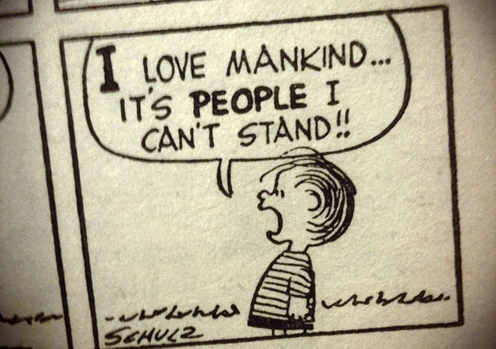
I love humanity, but I hate people.                            
- Edna St. Vincent Millay 
This is a very special quote. This is because (in my opinion) everyone's interpretation of it will be different. A person's interpretation could be worlds apart from the person next to them's, or it could be uncannily similar.

My interpretation of this quote is that Millay is trying to say there is a distinction between the idea of humanity and the cold hard reality of humans: she is saying that she loves the idea of humanity; she loves the idea of people putting the well-being of another person before their own.

Sadly, people no longer abide by the rules of humanity (surely they must have done so at some point in history!), and due to this Millay has started to "hate" the human race. They have tarnished the name of humanity and run wild and high on selfishness.

I'm sure that a lot of people think that Millay's point of view is extreme, but the thought of people going about their buisness and not caring what happens to the other beings around them probably makes any lover of humanity cringe.

Would it hurt to try and be more aware of the people around you and the situation they're in? Probably not. So be more compassionate towards your fellow human beings this week. I'm certain you'll find it's worth the effort ;)

Thursday, 23 August 2012

What is Time?

by Sparshita Dey
time, clock, economics for teens, economics for teenagers, teenage economist, teen economist

Time is a complicated topic itself but it has become an everyday thing for all of us. We are constantly basing our day to day activities on “time” and even the fact that we exist on it (i.e. birthdays). But is that all time is – made up numbers and units to base our lives on? Or is there much more? And exactly what is time besides the continuous ticks of a clock?

Sunday, 12 August 2012

Stephanomics Review: Whose fault is the economic crisis?

by Viva Avasthi

"Who deserves most blame for the financial mess we're all in? Is it the bankers? Or should we also save some time for the economists?"

Stephanie Flanders, the BBC's Economics Editor, asks these questions in an episode of Stephanomics, her programme on economics. The episode reviewed here focuses on the economics of the global financial crisis and the problems regarding the Eurozone. This article is, in sorts, a summary of the discussion Stephanie Flanders had with the billionaire investor George Soros, Sir Howard Davies (former chairman of the Financial Services Authority and former deputy governor of the Bank of England), and Dr DeAnne Julius (chairman of Chatham House and a former member of the Bank of England's monetary policy committee). Only the discussion about the global financial crisis has been summarised to prevent the article from becoming too long. To read an article explaining the problems in the Eurozone, click here.
Dr DeAnne Julius, economics for teens, economics for teenagers, stephanomics
Dr DeAnne Julius

George Soros
George Soros
Sir Howard Davies, economics for teens, economics for teenagers, stephanomics
Sir Howard Davies


Saturday, 11 August 2012

7 Reasons for the Chinese Economic Miracle

The Chinese economy has been growing at an average rate of 10% for the past three decades. This unprecedented growth has astounded onlookers, but many who do not read into the Chinese economic miracle have little to say about why this has happened. They often chalk it up to exports and the manufacturing boom, often represented by a 'made in China' signature on the bottoms of cheap plastic products. That is only a small part of why China is rivalling the United States as the world's industrial powerhouse. Here are seven reasons for the Chinese economic miracle.

1. Peasants could farm a section of land for themselves

Previously, both the ownership and use of land was collectivised. Farms were people's communes, whereby all the peasants working the land owned it, and they farmed collectively. The reform that ended 20 years of collective farming didn't redistribute land ownership; rather, it allocated the use of land through a contract, so that peasants could choose how they wanted to farm the land. This reform took place over 5 years and considerably increased efficiency and output.

2. The relaxation of price controls on foodstuffs
Before the reforms, basic foods such as grain, meat and eggs were distributed using a strict rationing system by the government. The price that was paid by the government for these foods was so low that firms didn't want to produce them. It led to bad food quality and inefficient production.
The farming reforms were the first step out of three to undo the pricing controls. The second step was the introduction of free local markets to support the first reform. And the third step involved aggressively raising the price ceilings, which helped suppliers and promoted productivity. The government also lowered the price for agricultural machinery to promote farming mechanisation.


Thursday, 9 August 2012

China at a Glance

by Chris Pearson

china, money, chinese economicsChina is becoming much more important in the world economy, meaning recent reports of a slowdown cast doubts into the minds of pundits abroad. China's GDP is fast approaching that of the US and this means that news about the Chinese economy holds much sway with global markets. 

Many assume that China is growing through its export revenue - but they are wrong - rather, 92% of  its growth comes from investment spending. Expected then, are those who believe that this surging investment level is fueling a fixed-asset price bubble -  like what happened in Japan and to the Asian tigers in the 90s. The difference between investment in China and the investment in the Asian tigers, prior to 1997, is the different sources of money used to invest. China's funds cannot be pulled out from under itself as easily as what happened to the Asian tigers because it does not rely on foreigners' money to fund its investment. 


Tuesday, 7 August 2012

Fame: A Secret Formula?

by Karen Birnie

Is there something that all famous people have in common? Is there some special thing that some people have which guarantees recognition? Or is it just plain hard work?

There's no doubt that to make it into the public eye in any field, one must be prepared to work extremely hard. Actors, singers, even scientists; to be renowned, your work must be of a supreme quality.


But surely there's a secret formula that leads to success, a secret ingredient in the mix of skill and hard work. Some people just seem to attract the limelight. What is it about these people? Do they make an extra effort, or are they born with it?


                             Audrey Hepburn, the highly successful actress...what was her secret?

Monday, 6 August 2012

Thought for the Week (06/08/12)

by Shireen Avasthi
nate williams, gandhi
Image created by Nate Williams
Be the change you want to see in the world.
What Mahatma Gandhi means by this is that change starts from you.

For example, if you want to live in a better society, you should set an example for others by being a better member of society.

If you want the world to change, you'll have to change yourself first. It's impossible to change others without first changing yourself.

Do what Gandhi did; lead by example. You cant expect others to do anything without someone to show them the way: you should be that someone.

Just remember, if you want to change something badly enough, you will find a way to be the one to change it.

Try initiating change this week; you might just find yourself enjoying it ;)


Wednesday, 1 August 2012

China's One Child Policy: a Good Idea?

by Shireen Avasthi

china, one child policyHow big is your family? How many siblings do you have? If you'd been born in China, you wouldn't have any: you would be an only child.

Is that fair? should a government be allowed to decide how many children a couple have? Whether or not a child has brothers and sisters to play with. Should anyone have the right to decide if a child has an enjoyable childhood?

If you have siblings, think about all the fun you've had together. Of course you have your arguments, but above all, you genuinely have a good time together.

I'm sure children with no siblings also have a fun-filled childhood; all the extra attention from parents must be great, but imaging doing all those exciting things with someone closer to your age to share them with. Wouldn't that be great?

I'm not denying that China's one child policy is a sensible way to try and control their immense population problem: it is. But are the rights families and children are required to give up in order to enforce this too heavy a price to pay?