Showing posts with label history. Show all posts

Friday, 12 July 2013

Whatever happened to the 'F word'?

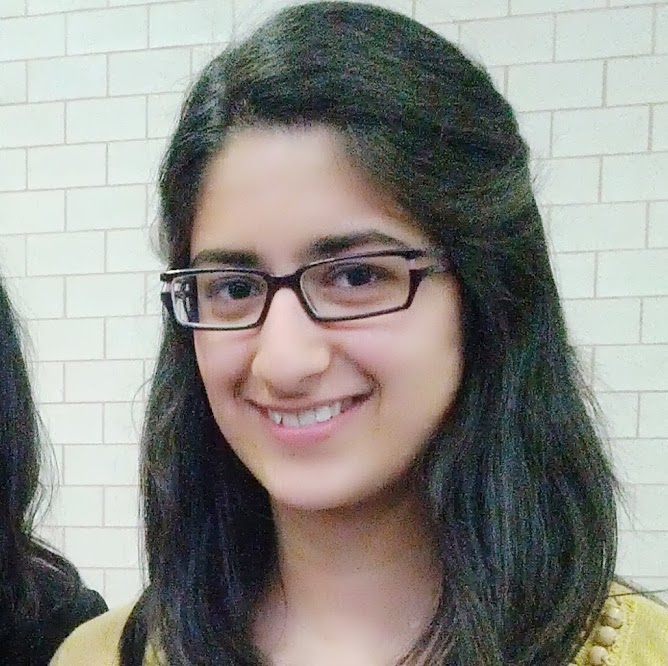
by Pavandeep Virdee


I can understand that the title above may be a little misleading - so just to clear any confusion, the only ‘F word’ I’ll be using in this article is in fact feminism! I know what you’re thinking: why feminism? Well, it may seem a little strange, but believe it or not, it seems that many young women and girls are more reluctant to talk about feminism; or even simply mention the word in a conversation, than ever before.

But why is this? With regards to feminism itself, there doesn’t seem to be anything wrong with its cause; it has been at the heart of defending equal political, economic and social rights for women for over 100 years. From the right to vote, all the way to having free access to contraception - the wave of feminism has passed us all. Nonetheless, what is the mystery behind the decline in modern feminism?

The biggest reason for the dislike of feminism amongst recent times, is that feminists are often branded by the media and anti-feminist groups, as being ‘men-haters’, who believe that women’s rights are more important than men’s rights - leading to them being too concerned about the issues of women, whilst forgetting the issues of men too.

Still, is this really the case? The truth is that most feminist groups today do not neglect the issues of men- some have in fact pioneered in promoting global awareness of unspoken issues, like prison rape - which largely affects male prisoners. It can be said however, that feminists do advocate more for the rights of women, but that’s largely because they believe that in comparison to men, women still have many significant issues, which are not always openly addressed by society - such as the lack of rights to contraception and abortion for many women in developing countries.

Tuesday, 31 July 2012

History of Economics: Why It's Still a Teenager

by Viva Avasthi


Image source: http://www.heathwoodpress.com

As it is a relatively new subject, economics could be considered a teenager compared to other subjects! If we look back through Western history, it is clear that most subjects developed substantially in the classical civilisations of Ancient Greece and Rome. From mathematics to music, literature and forms of science, the Ancients form the basis of most of the subjects we study today. For some reason, this is not the case for economics. Although the word 'economics' comes from the Ancient Greek οἰκονομία, the Greeks only really studied home economics and wrote books only in subjects like bargaining for horses. Why is this the case? Why is it that for the first influential book on economics to be published in the western world, we had to wait until 1776 for Adam Smith and his The Wealth of Nations? Here, three main contributing factors are explored:

Saturday, 21 July 2012

The Five Most Interesting Conflicts - The Hundred Years' War

by Hannah Gent

Over the next five weeks I will be looking at some of the most interesting conflicts since the fourteenth century. Although there are many other remarkable, historical wars, the five that I have chosen are conflicts that are famous by name but their details are not so well-known.
hundred years war, history, battle
These are the conflicts that I will be writing about each week in chronological order:
  • The Hundred Years' War: 1337-1453
  • Boer Wars: 1880-1902
  • WWI: 1914-1918
  • The Arab Israeli Conflict: 1948-present day
  • The Vietnam War: 1955-1975

In this article, I will be explaining what the Hundred Years' War was, what was the cause of the conflict and why I find this period of interesting.


Sunday, 15 July 2012

A Modern Monarchy?

by Clemency Flitter

It seems that the monarchy in Britain is more popular than ever! After the relatively recent royal wedding and the more recent Diamond Jubilee people are in love with the British monarchy more so than ever; after all our monarchy is something that is quite rare in these times. Since the French Revolution having a monarchy became something that was increasingly rare as many European countries such as Russia (who got rid of the Tsar) and Germany (who dispatched with the Kaiser near the end of World War I) have left their monarchy behind and moved on. However, maybe Britain’s decision to stick with our traditionalist monarchy has paid off rather well in the long run.

queen, queen in china, diamond jubilee
The "Queen" arrives to great crowds in Shanghai
As one of very few surviving monarchies the Queen and Buckingham palace attract many tourists to London each year. There is also a lot of foreign media attention in large events in which the monarchy feature. America, in particular, had a lot of media attention spent on the Royal Wedding and even made a film about it! On the Queen’s Diamond Jubilee President Barack Obama sent out a video message to the Queen and there were many American tourists in London to get a glimpse of the Jubilee procession. The Queen is also very popular in China, recently a lookalike was present in Shanghai to try to give Chinese people the feel of the Diamond Jubilee, this caused a big stir as thousands of people flocked to see the fake monarch as news spread of the arrival of “Queen Elizabeth”.

Tuesday, 10 July 2012

The Social Contract: Part 1

by Viva Avasthi

“Society is a contract… the state is a partnership not only between those who are living, but between those who are living, those who are dead, and those who are yet to be born.” (Edmund Burke - 18th Century political theorist and philosopher)


people, society, culture, economics for teens, economics for teenagers
Edmund Burke was essentially suggesting that the well-being of the nation and all its citizens is of greater importance than the individual. In a sense, this is very similar to the quote "no man is his own island" in the way that the idea of everybody being deeply interrelated is a prominent feature of both quotes. But how many of today's governments are actually adhering to the 'contract' that everybody seems to have unwittingly signed? This intriguing idea was elaborated upon by the economic historian Prof. Niall Ferguson in the first of this year's  BBC Reith Lectures. In this first of a series of four lectures, Niall Ferguson argued the case that "today we've had a breach of [the contract]." 

On Friday, I will be explaining how Niall Ferguson defended his point of view and I will be giving a few counter-arguments both for the sake of debate and to provide you as readers with a relatively balanced perspective. However, before we engage in some serious debating on Friday (yay!), here's a chance for you to share your initial views on the subject.

 Do you believe modern governments are in breach of this 'contract'? Do you feel that governments need to be more open in terms of revealing their decision-making and so on to the public? Comment, comment, comment!

Click here to read the follow-on article.

Saturday, 5 May 2012

The Unexpected City That Changed The World

by Viva Avasthi
birmingham bull, birmingham city centre, bullring


Do you live in a democracy? Are you American? Are you a female? Are you of African or Caribbean origin? Do you live in a country that manufactures goods?

If you can say yes to any one of those seemingly random questions, then you've almost certainly been massively affected by Birmingham, a British city that you might never have heard of.


Friday, 27 April 2012

From Pottery Shards To Phone Votes: Where Does The UK Fit In?

by Clemency Flitter

women's rights, campaigners, votes, economics for teens, economics for teenagers, teenage economist, teen economist
Two Campaigners

I like to think many people who live and work in the UK are very proud of the democracy we share in this country. Every five years we all get to vote and choose a party which will go on to represent us and make the decisions on behalf of the population. Many have striven and many have died for this right to everybody getting a free and secret vote, with first the push to get all classes an equal vote and then the protests and hunger strikes of Votes for Women. It’s been a pretty rough ride getting to where we are now, and I would say it has been worth it, for there is certainly more equality in the way the government is run now than ever before. But is it still truly a democracy?